
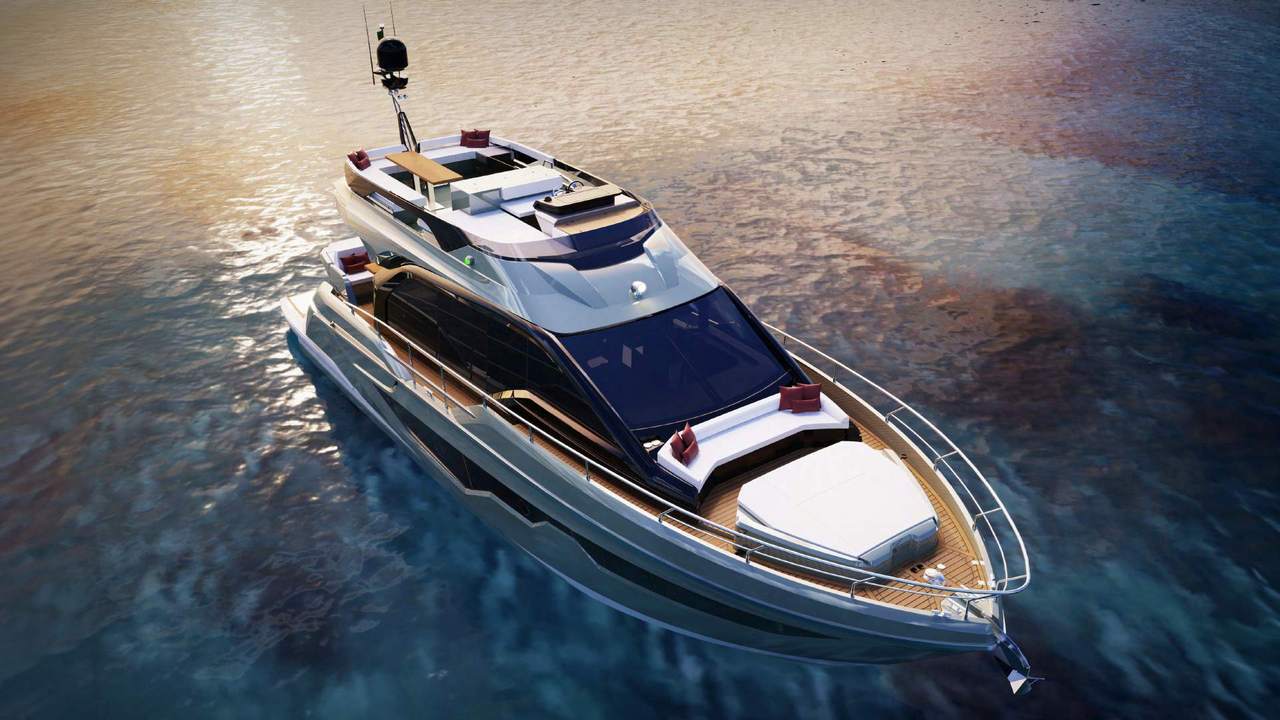
La Sessa F60 è un flybridge di 18,30 metri che concentra in un’unica piattaforma tre suite per gli ospiti, cabina equipaggio indipendente, quattro aree esterne, garage e una coppia di Volvo Penta IPS950 da 725 hp. La scheda italiana indica 4,98 metri di baglio, 2.100 litri di carburante, 750 litri d’acqua, 14 persone e sei posti letto più uno. Il catalogo aggiunge 1,45 metri di pescaggio, 27 tonnellate a secco e 30 tonnellate a pieno carico. È quindi una barca da configurare con metodo, perché propulsione, servizi alberghieri e movimentazioni idrauliche sono strettamente collegati.
La velocità massima dichiarata è 30 nodi, ma non costituisce una prova della singola unità né descrive consumi e autonomia. Prima dell’acquisto servono la distinta completa, la curva dei motori, la condizione di carico e un collaudo ripetibile. L’interesse tecnico della F60 sta piuttosto nell’integrazione: la plancia può monitorare motori, pompe di sentina, generazione e consumo elettrico, allarmi e livelli; lo stesso sistema può comandare luci, climatizzazione e audio. Questa centralizzazione è utile soltanto se conserva ridondanze e procedure manuali.
Specifiche da riportare nel contratto
| Voce | Dato ufficiale | Verifica richiesta |
|---|---|---|
| Lunghezza fuori tutto | 18,30 m | Confermare ingombri di piattaforma e appendici |
| Baglio | 4,98 m | Compatibilità con ormeggio e travel lift |
| Pescaggio | 1,45 m nel catalogo 2024 | Applicare margine per carico e fondale |
| Dislocamento | 27 t a secco; 30 t a pieno carico | Allineare definizioni e optional installati |
| Propulsione | 2 × Volvo Penta D11 IPS950, 725 hp ciascuno | Registrare seriali, software, rapporti e pod |
| Velocità massima | 30 nodi dichiarati | Misurare sulla barca con carico annotato |
| Carburante | 2.100 l | Calcolare autonomia con riserva operativa |
| Acqua dolce | 750 l | Confrontare con equipaggio e produzione a bordo |
| Persone | 14; posti letto 6+1 | Separare capienza diurna e autonomia notturna |
| Cabine | 3 ospiti + 1 equipaggio | Provare ventilazione, servizi e vie di accesso |
| Categoria | B | Conservare documentazione e limiti certificati |
Doppio IPS950: configurazione e responsabilità
I due D11 da 725 hp con pod IPS950 formano una catena integrata di propulsione e governo. Motore, trasmissione, sterzo, joystick, autopilota e interfacce devono avere versioni compatibili. La consegna deve includere seriali, campagne tecniche, intervalli di manutenzione e stato del software. Nel vano si controllano filtri, giranti, scambiatori, prese a mare e tenute dei pod. Il contratto dovrebbe indicare anche eliche, protezione anticorrosione e responsabilità fra cantiere e rete di assistenza, evitando zone grigie in garanzia.

Trenta nodi dichiarati, non una promessa universale
La velocità riportata dal cantiere va letta con dislocamento, mare, vento, temperatura e pulizia della carena. La differenza fra 27 e 30 tonnellate mostra quanto il carico possa incidere. Durante il collaudo si registrano liquidi, persone, tender e dotazioni, poi si percorrono regimi progressivi. I due motori devono raggiungere giri coerenti e mantenere temperature e pressioni allineate. Assetto, vibrazioni e rumorosità contano quanto la punta; una velocità raggiunta con correzioni estreme non descrive un equilibrio riuscito.
Autonomia: partire dai 2.100 litri
La capacità carburante è nota, ma il consumo non è riportato nella scheda sintetica. L’autonomia deve quindi derivare dalla curva della specifica unità, non da una stima generica. Si sottrae una riserva coerente con la rotta, si includono manovre, generatore e mare contrario e si confrontano indicatori con i volumi riforniti. Sfiati, valvole, prefiltri e ritorni devono essere accessibili. Campionare il carburante nei punti bassi aiuta a rilevare acqua o contaminazione prima che raggiungano entrambi i motori.
Plancia integrata e dominio degli allarmi
Il sistema di monitoraggio descritto gestisce informazioni motore, pompe di sentina, energia, allarmi e capacità dei serbatoi. Una sola interfaccia riduce il numero di pannelli, ma può creare dipendenza da rete e display. La sequenza di verifiche deve mappare quali funzioni restino disponibili dopo il guasto dello schermo principale, del bus dati o di un alimentatore. Gli allarmi critici richiedono segnalazione chiara e, dove previsto, circuito indipendente. Configurazioni e licenze software devono essere esportate e conservate insieme ai manuali.
Joystick, governo e seconda postazione
La F60 dispone di plancia interna e postazione sul flybridge. Entrambe devono offrire risposta coerente, visuale e accesso agli allarmi. Il joystick si prova in traslazione laterale, rotazione e mantenimento della posizione, senza sostituire la conduzione convenzionale. Si verificano passaggio di comando, arresti, autopilota e comunicazione con chi assiste all’ormeggio. Un guasto simulato permette di accertare che timone e manette restino utilizzabili secondo la procedura prevista.

Piattaforma idraulica: funzione e limiti
La piattaforma di poppa combina una parte fissa e una sezione immergibile azionata idraulicamente. Può agevolare imbarco, bagno e movimentazione, ma ogni uso ha carichi e posizioni ammessi. La documentazione deve indicare portata, persone consentite e compatibilità con il tender. In collaudo si controllano discesa simmetrica, fine corsa, arresto d’emergenza, tenuta dei raccordi e recupero manuale. Cerniere, perni e attuatori richiedono risciacquo e ispezione dopo l’esposizione all’acqua salata.
Garage, tender e moto d’acqua
Il garage ha apertura tramite pistone idraulico e verricello elettrico; il catalogo indica spazio per una moto d’acqua oppure un tender fino a 2,80 metri, oltre a giochi d’acqua e attrezzatura da immersione. “Fino a” non significa che ogni mezzo di quella lunghezza sia compatibile. Baglio, altezza, peso, punti di appoggio e carburante devono essere verificati. Il ciclo di varo va provato con equipaggio reale, controllando ventilazione, drenaggi, comunicazione e assorbimento del verricello.

Flybridge: seconda terrazza tecnica
Il fly comprende plancia, prendisole, mobile gourmet e divano a L con tavolo; può ricevere una copertura T-top. Ogni elemento aggiunge peso e utenze in quota. Frigorifero, piastra, acqua, illuminazione e audio entrano nel bilancio elettrico e idraulico. Il T-top deve rispettare visuale, vento, altezza complessiva e disposizione delle antenne. Gli scarichi del ponte restano liberi anche con cuscinerie installate, mentre porte e cassetti devono avere fermi adatti alla navigazione.

Quattro aree esterne indipendenti
Piattaforma, pozzetto, prua e flybridge permettono di separare attività e gruppi. Operativamente moltiplicano però arredi, illuminazione, drenaggi e superfici da mettere in sicurezza. La prua combina prendisole rialzato e divano vicino al parabrezza; il pozzetto ospita divano e tavolo; la poppa può ricevere un mobile gourmet. Prima dell’uscita serve una procedura unica per chiudere cuscinerie, tavoli, tendalini, porte e gavoni, verificando che nessun accessorio ostacoli vie di passaggio o dotazioni di emergenza.
Main deck: cucina fra salone e pozzetto
La cucina si trova sullo stesso ponte del salone ed è connessa all’area esterna di poppa. Questa posizione semplifica il servizio, ma concentra carichi elettrici, acqua e ventilazione vicino alla porta. Ogni apparecchio deve avere potenza, protezione e circuito identificati. Cassetti e stoviglie richiedono fermi; aspirazione e ricambio d’aria si provano con chiusure in posizione di navigazione. Valvole e scarichi devono essere raggiungibili senza rimuovere definitivamente mobili o piani.

Salone e grandi superfici vetrate
Le finestre laterali aumentano luce e visuale, ma anche carico termico. La climatizzazione deve compensare l’irraggiamento senza produrre rumore o correnti eccessive. Fan coil, riprese e scarichi condensa devono essere ispezionabili dietro i pannelli. Vetrate e porta poppiera si controllano con lavaggio e navigazione, osservando guarnizioni, guide e drenaggi. L’arredo non deve ostacolare il percorso verso l’esterno quando la barca è al buio o con alimentazione ordinaria interrotta.
Tre suite sul ponte inferiore
La zona privata comprende suite armatoriale a centro barca, VIP a prua e terza cabina a dritta. Il bagno della terza può essere condiviso con gli ospiti, soluzione che richiede una chiara gestione delle porte. In ciascun ambiente si provano climatizzazione, ricambio d’aria, illuminazione notturna, prese e scarichi. Materassi e armadi non devono coprire ispezioni. Le tre cabine, usate contemporaneamente, aumentano consumi di acqua e carico termico rispetto a un equipaggio ridotto.

Suite armatoriale a tutto baglio
La cabina centrale sfrutta i 4,98 metri di larghezza e include bagno, divano e cabina armadio. La posizione vicina alla sala macchine rende importante l’isolamento acustico e vibratorio. Durante la prova si ascolta il locale a differenti regimi e con generatori o climatizzazione in funzione. Oblò, condense e ventilazione meritano un controllo dopo una notte a bordo. Pannelli laterali e paglioli devono poter essere aperti per raggiungere tubazioni e cablaggi.
Cabina equipaggio indipendente
L’accesso separato e il bagno privato migliorano funzionalità, ma l’alloggio deve ricevere lo stesso livello di verifica degli spazi ospiti. Ventilazione, altezza, illuminazione, uscite e comunicazione con le plance incidono sulla sicurezza. Va chiarito se il settimo posto letto dichiarato corrisponda all’equipaggio e quali servizi siano condivisi. La vicinanza ai vani tecnici richiede particolare attenzione a rumore, calore e rilevazione degli allarmi.

Settecentocinquanta litri d’acqua
La capacità è significativa, ma sette persone possono consumarla rapidamente. Si costruisce un bilancio per docce, cucina, lavaggi e WC, quindi si decide se installare un dissalatore. In tal caso servono presa a mare, prefiltri accessibili, scarico salamoia, assorbimento elettrico e procedura di conservazione. Autoclavi e vasi di espansione si provano con più utenze aperte. L’indicatore del serbatoio va confrontato a diversi livelli e non soltanto vicino al pieno.
Acque nere e grigie
Il catalogo 2024 riporta 160 per il serbatoio delle acque nere e 160 per le grigie, ma etichetta le unità in modo incoerente nell’edizione inglese; la pagina italiana sintetica non ripete questi valori. È prudente far indicare nel contratto capacità e unità corrette della barca ordinata. Sensori, sfiati, pompe e scarichi da banchina devono essere identificati. La prova verifica allarmi di livello, assenza di riflussi e accesso alle parti soggette a intasamento.
Energia: generazione, batterie e priorità
La scheda sintetica non specifica capacità di generatori e batterie, quindi questi dati devono arrivare dalla distinta dell’esemplare. Si costruiscono scenari per navigazione, rada, notte e banchina, sommando climatizzazione, cucina, boiler, pompe, elettronica e utenze esterne. Il sistema di monitoraggio deve mostrare produzione e consumo, ma serve anche una misura indipendente in collaudo. Priorità e distacco dei carichi impediscono che un picco alberghiero spenga apparati essenziali.
Climatizzazione e automazione
Illuminazione, aria condizionata e audio possono essere comandati dal sistema integrato. È opportuno stabilire comandi locali di emergenza e comportamento dopo una perdita di rete. La climatizzazione si prova per ambiente per diverse ore, controllando portata, temperatura, rumore e condensa. Automazioni e scene non devono nascondere l’assorbimento reale. L’armatore dovrebbe ricevere backup delle configurazioni, credenziali amministrative e procedura per il ripristino senza dipendere esclusivamente da un tecnico remoto.
Connettività e sicurezza digitale
Una rete che unisce monitoraggio, domotica e intrattenimento richiede segmentazione e aggiornamenti. Router, access point e gateway devono essere inventariati con versioni e password consegnate. L’accesso remoto va attivato soltanto quando necessario e registrato. Un guasto alla rete ospiti non dovrebbe influire su allarmi o navigazione. Le copie della configurazione si conservano offline. Questa disciplina riduce il rischio che un aggiornamento apparentemente innocuo renda indisponibili funzioni di comfort o, peggio, dati operativi.
Sala macchine e accessibilità
I due D11, i pod e gli impianti ausiliari devono poter essere serviti a macchine fredde e calde. Filtri, giranti, cinghie, livelli e valvole devono avere spazio per gli attrezzi. Si verifica il percorso di estrazione dei componenti maggiori e la possibilità di raggiungere il lato interno di ciascun motore. Illuminazione, ventilazione e sentina pulita favoriscono una diagnosi precoce. Etichette resistenti a calore e umidità evitano errori durante un intervento urgente.

sequenza di verifiche prima della partenza
- Confermare livelli, autonomia prevista e riserva carburante.
- Controllare motori, pod, prese a mare, sentine e allarmi.
- Chiudere piattaforma, garage, gavoni, porte e arredi mobili.
- Provare governo, joystick, radio, radar e luci da entrambe le plance.
- Fissare tender, attrezzatura e oggetti nelle quattro aree esterne.
- Verificare carico elettrico, generatori e stato dei banchi batterie.
- Condividere meteo, rotta, porti alternativi e ruoli dell’equipaggio.
Collaudo di accettazione
La prova comincia con inventario di liquidi, persone e dotazioni. Si testano partenza, manovra, arresto, passaggio fra plance e regimi progressivi. I dati dei due motori vengono confrontati; vibrazioni e rumore si osservano in cabina armatoriale. In rada si attivano cucina, climatizzazione, piattaforma e garage, simulando perdita di una sorgente elettrica. Al rientro si ispezionano sentine, tenute, raccordi e codici di errore. Ogni non conformità richiede correzione e nuova verifica.
Documentazione e manutenzione
Manuale dell’armatore, schemi finali, seriali, certificati, garanzie, elenco software e piano manutentivo devono corrispondere alla barca. Il registro separa controlli per uscita, mensili, stagionali e per ore motore. Fotografie dei vani tecnici e una mappa delle valvole aiutano equipaggio e assistenza. I ricambi iniziali comprendono elementi coerenti con D11, pod, pompe, climatizzazione e sistemi idraulici. La documentazione completa riduce fermo tecnico e protegge il valore alla rivendita.

Valutazione tecnica della Sessa F60
La F60 offre una distribuzione convincente per chi vuole tre suite, equipaggio separato e spazi esterni realmente distinti. La coppia IPS950, i 2.100 litri di carburante e il dislocamento a pieno carico delineano un flybridge prestazionale, ma la qualità finale dipende dall’integrazione dei sistemi. Piattaforma, garage e domotica aumentano il valore d’uso insieme alla manutenzione necessaria. La scelta è solida quando distinta, bilancio energetico, collaudo e ridondanze sono documentati con la stessa attenzione riservata agli ambienti.