
Configurare una Swan 128 significa trasformare un progetto di 38,98 metri in una barca documentata, manutenibile e comprensibile per l’equipaggio. La scheda Nautor Swan dichiara dati utili su serbatoi, batterie, generatori, alimentazione da terra, motore e piano velico. Questa guida li organizza in una controlli di consegna, mantenendo separate capacità nominali, valori stimati e verifiche da svolgere sull’esemplare.
Swan 128: tabella per la configurazione
| Voce | Dato dichiarato | Controllo operativo |
|---|---|---|
| Motore principale | 405 kW / 550 hp | Targa, seriale e manuali |
| Generatori | 2 × 32 kW | Prova separata e trasferimento |
| Uscita generatori | 230/400 V trifase | Schema e protezioni |
| Alimentazione da terra | 230/400 V, 50 A trifase | Compatibilità del punto presa |
| Banco servizi | 24 V, 2.530 Ah / 1 h | Carichi e ricarica |
| Banco radio | 24 V, 230 Ah / 1 h | Separazione e allarmi |
| Banco avviamento | 24 V, 75 Ah / 20 h | Caduta di tensione |
| Carburante / AdBlue | 5.500 / 550 l | Livelli, sfiati e valvole |
| Acqua dolce / calda | 2.650 / 200 l | Pompe e temperature |
| Grigie / nere | 600 / 600 l | Sensori e percorso di scarico |

Prima regola: identificare l’unità reale
La pagina di modello è il punto di partenza, non il fascicolo definitivo. Marca e modello del motore, seriali, allestimenti, materiali e circuiti devono essere ricavati dalla distinta della barca consegnata. Ogni manuale viene associato a un componente effettivamente installato, evitando raccoglitori generici che confondono versioni diverse.
La sequenza di verifiche usa un codice per apparato e collega disegno, manuale, ricambio, prova e fotografia. Quando un componente cambia durante la costruzione, la revisione precedente resta archiviata ma viene marcata come superata.
Dimensioni da consegnare al comandante
Lo scafo misura 38,98 metri, il galleggiamento 35,94, il baglio massimo 8,65 e il pescaggio standard 4,70. Sono quattro quote con funzioni differenti. La scheda operativa deve riportarle senza arrotondamenti arbitrari e chiarire quale valore usare per ormeggio, accesso, alaggio e pianificazione.
Prima di scegliere un porto si controlla l’intero percorso: imboccatura, canale, bacino di evoluzione e posto barca. Fondale nominale e disponibilità reale possono divergere; la decisione spetta a verifiche aggiornate e alle responsabilità di bordo.
Stime di peso e condizione di carico
Il dislocamento leggero indicato è 122.800 chilogrammi, quello carico 136.200 e la zavorra 39.500, tutti qualificati come stime. La stazza lorda di 188 GT è anch’essa stimata e non rappresenta il peso. La sequenza di verifiche deve mantenere queste qualifiche accanto ai numeri.
Per l’esemplare si prepara un registro dei pesi con quantità, posizione e stato dei serbatoi. Tender, ricambi, cambusa e dotazioni non vengono aggiunti senza aggiornare il quadro, così i confronti restano riferiti a condizioni note.

Motore principale: cosa controllare
La potenza pubblicata è 405 kW, equivalenti a 550 hp. Non essendo specificati qui costruttore e modello, la sequenza di verifiche li acquisisce dalla targa e dai documenti dell’unità. Si registrano seriale, trasmissione, raffreddamento, scarico, alimentazione e dispositivi di arresto secondo la configurazione reale.
La prova segue il protocollo del cantiere e annota condizioni e letture previste. Non si deducono velocità, consumi o autonomia dalla sola potenza: servono misure tracciabili dell’esemplare e uno stato di carico noto.
Carburante: capacità e quantità utilizzabile
La capacità nominale dichiarata è 5.500 litri. La quantità utilizzabile non va inventata, perché dipende dalla disposizione effettiva e dalle condizioni definite nei documenti di bordo. Il controllo identifica serbatoi, bocchettoni, sfiati, valvole, sensori e punti di drenaggio.
Ogni comando riceve un’etichetta coerente con lo schema. La prova comprende lettura dei livelli e passaggio tra configurazioni previste, senza manovre non autorizzate. Il registro rifornimenti conserva quantità, data e rilievi utili.
AdBlue separato dal carburante
La capacità dichiarata per l’AdBlue è 550 litri. Il circuito deve essere trattato separatamente, con bocchettone, indicazione e procedura chiaramente riconoscibili. La consegna verifica che non esistano ambiguità di etichettatura con carburante o acqua.
Manuali e specifiche dell’apparato installato determinano qualità del fluido e gestione. La scheda generale non basta per introdurre intervalli o consumi: si riportano soltanto quelli previsti nella documentazione della singola unità.

Acqua dolce: 2.650 litri nominali
Il volume dichiarato per l’acqua dolce è 2.650 litri. La sequenza di verifiche segue il percorso dal carico alle utenze, identificando serbatoi, pompe, filtri, valvole e indicatori realmente presenti. Le pressioni e le procedure accettabili restano quelle della documentazione consegnata.
Si prova un’utenza alla volta e poi una combinazione rappresentativa, osservando avviamento e arresto delle pompe. Perdite o rumori anomali vengono registrati e chiusi con una nuova verifica, non con una semplice nota verbale.
Accumulo di acqua calda da 200 litri
La capacità dichiarata dell’acqua calda è 200 litri. Il controllo non si limita al volume: comprende identificazione del componente, protezioni, valvole, percorso delle tubazioni e accesso per manutenzione. Temperature e regolazioni si ricavano dai manuali specifici.
Durante la prova si controllano erogazione e stabilità nelle condizioni previste, usando cautele appropriate. Ogni pannello rimosso viene riposizionato e l’accessibilità futura resta parte dell’accettazione.
Acque grigie: 600 litri
Per le acque grigie sono dichiarati 600 litri. La verifica segue immissioni, pompe, sensori e percorso previsto per lo svuotamento, nel rispetto delle procedure applicabili. Le diverse utenze devono essere riconducibili allo schema aggiornato.
La simulazione controlla indicazioni e allarmi senza assumere soglie non dichiarate. Eventuali differenze tra display, etichette e disegno vengono risolte prima della consegna, perché un circuito ambiguo diventa un problema operativo.

Acque nere: altri 600 litri
Anche la capacità nominale delle acque nere è 600 litri. Circuiti e comandi devono essere chiaramente distinti da quelli delle grigie. La sequenza di verifiche identifica valvole, sensori, punti di ispezione e modalità ammesse di gestione, rimandando alle regole applicabili e ai manuali dell’unità.
Il collaudo cerca tenuta, corrette indicazioni e accessibilità, senza effettuare operazioni non autorizzate. Guanti, materiali e procedure di igiene fanno parte della preparazione dell’equipaggio, non di un accessorio editoriale.
Due generatori da 32 kW
La configurazione dichiarata comprende due generatori diesel da 32 kW ciascuno. La presenza della coppia permette di organizzare alternanza e disponibilità, ma non garantisce automaticamente ridondanza completa: dipende da quadri, distribuzione e servizi condivisi dell’unità.
Si provano separatamente avviamento, stabilizzazione, presa di carico, allarmi e arresto. Poi si verifica il trasferimento previsto dal progetto, annotando quali carichi restano alimentati in ogni assetto e quali richiedono priorità.
Distribuzione trifase a 230/400 volt
L’uscita dei generatori è dichiarata a 230/400 V trifase. Il quadro di consegna deve includere uno schema unifilare aggiornato, l’identificazione delle protezioni e la ripartizione dei carichi. Interventi sui quadri competono a personale qualificato secondo le procedure applicabili.
L’equipaggio impara a leggere le indicazioni e a riconoscere un assetto anomalo, senza manovre improvvisate. La prova di accettazione registra sequenza, condizioni e risultato, rendendo ripetibile il controllo.

Collegamento da terra trifase
La presa da terra è dichiarata a 230/400 V, 50 A, trifase. Prima del collegamento si verifica la compatibilità dell’infrastruttura, dei cavi, dei connettori e delle protezioni. Non ogni banchina offre la stessa configurazione, anche quando la potenza apparente sembra sufficiente.
La sequenza di verifiche riporta sequenza di connessione, controllo delle indicazioni, trasferimento del carico e distacco secondo il sistema installato. Cavi e adattamenti non previsti non entrano nell’inventario di bordo.
Tabella dei carichi prima delle prove
I due generatori e la presa da terra non autorizzano l’accensione indiscriminata di ogni utenza. Prima del collaudo si costruisce una tabella dei carichi reali, distinguendo servizi essenziali, carichi intermittenti e utenze differibili. I valori vengono presi da targhe e schemi dell’esemplare.
La tabella aiuta a scegliere scenari rappresentativi e a capire l’ordine di priorità. Ogni modifica successiva a un apparato richiede di aggiornare potenza, protezione e documentazione.
Banco servizi da 2.530 Ah
Il banco servizi è dichiarato a 24 V e 2.530 Ah con riferimento di un’ora. Il dato non equivale a un’autonomia certa: profilo di scarica, condizioni e rendimento incidono sul risultato. La sequenza di verifiche evita conversioni semplicistiche e utilizza le istruzioni del sistema installato.
Si identificano elementi, protezioni, sezionamenti, ricarica e monitoraggio. Le soglie operative vengono riportate solo se presenti nella documentazione dell’unità; le letture iniziali sono registrate per creare un riferimento.

Banco radio da 230 Ah
Il banco radio è dichiarato a 24 V, 230 Ah con riferimento di un’ora. La separazione nominale va verificata sullo schema e sui componenti reali, controllando alimentazione, protezioni e indicazioni. Il collaudo segue il protocollo previsto senza simulare guasti pericolosi.
La scheda collega ogni apparato di comunicazione al circuito pertinente e alle procedure di controllo. Un’etichetta coerente fra quadro, manuale e registro riduce gli errori quando serve intervenire rapidamente.
Banco di avviamento da 75 Ah
Il banco di avviamento è indicato a 24 V e 75 Ah con riferimento di venti ore. La durata di riferimento differisce da quella dei banchi servizi e radio; per questo i valori non sono direttamente confrontabili. Ogni capacità conserva accanto la propria condizione dichiarata.
Il controllo comprende identificazione, protezioni, connessioni e letture durante la procedura prevista. Limiti e criteri di accettazione devono venire dai manuali del motore e del sistema elettrico effettivamente installati.
Bilancio energetico e registro
Una volta censiti i carichi si costruiscono scenari di banchina, generatore e batteria. Per ciascuno si annotano servizi disponibili, priorità, modalità di ricarica e responsabilità. Il bilancio non inventa autonomie: espone ipotesi, valori misurati e margini adottati.
Il registro conserva ore dei generatori, eventi, allarmi e interventi. L’alternanza viene definita dall’armatore e dai manuali, così entrambe le unità restano inserite in un programma di esercizio e manutenzione tracciabile.

Piano velico: quote da riconciliare
Le quote pubblicate sono IG 48,00 metri, J 15,37, P 47,50 ed E 15,80. Il triangolo di prua misura 368,9 metri quadrati; randa e fiocco secondo il riferimento ORC sono rispettivamente 443,8 e 401,5 metri quadrati. La sequenza di verifiche le confronta con la configurazione ordinata.
Ogni vela riceve identificazione, superficie, collocazione e procedura di movimentazione. Le quote geometriche non vengono trasformate in prestazioni presunte; gli esiti appartengono a prove registrate con condizioni note.
Gestire il dato provvisorio dello spinnaker
Lo spinnaker asimmetrico è indicato in 1.180 metri quadrati con la dicitura TBC, quindi ancora da confermare. Il dato resta provvisorio fino a una revisione approvata. Ordini e stivaggi collegati devono usare la misura finale della configurazione effettiva.
La sequenza di verifiche contiene una colonna per lo stato del dato: preliminare, confermato o superato. Questo semplice controllo impedisce che una cifra pubblicata in fase di progetto diventi una specifica operativa senza verifica.
Tre aree di pozzetto da provare
Il pozzetto è diviso in tre aree; quella anteriore, vicina alla tuga, è protetta da sprayhood e bimini. Un bimini rigido retrattile è previsto come opzione. La configurazione scelta deve apparire nei disegni e nell’inventario, con comandi e posizioni chiaramente identificati.
La prova simula passaggi, apertura, chiusura e stivaggio secondo le istruzioni. Tavoli, cuscini e parti mobili ricevono una sede sicura; nessun allestimento deve bloccare accessi tecnici o drenaggi.
Salone semi-rialzato e accessibilità
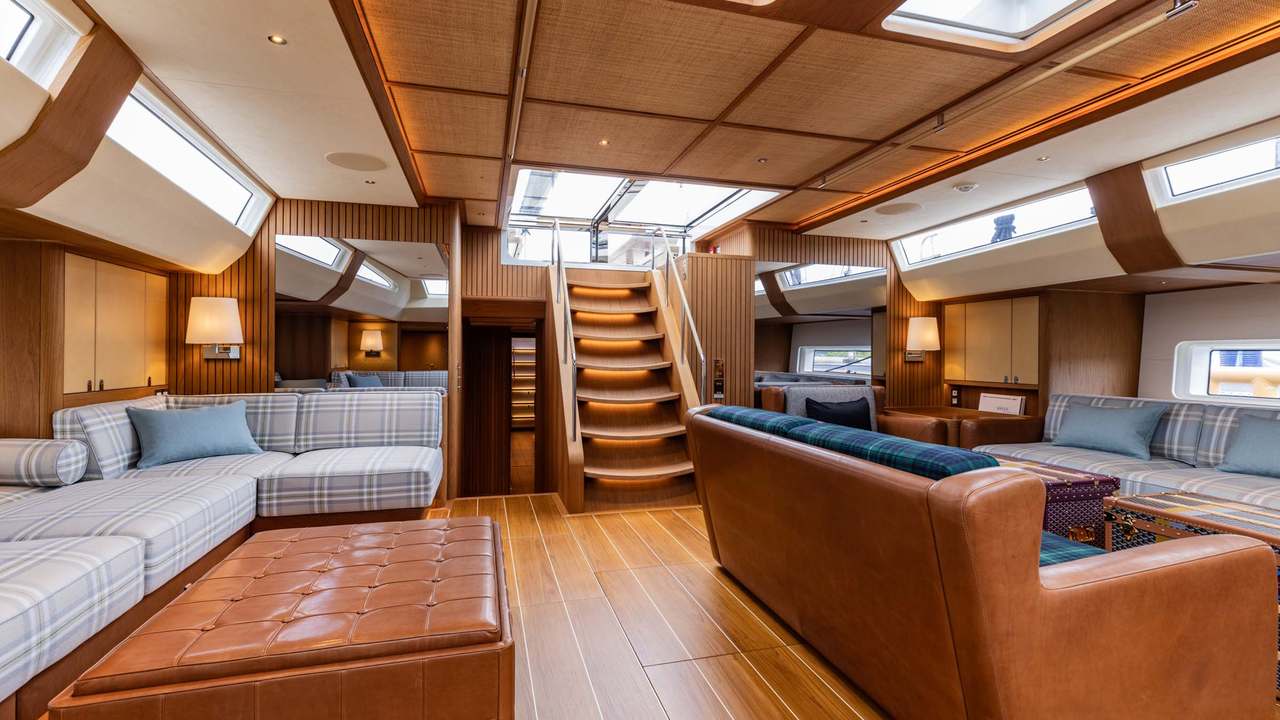
La tuga scolpita racchiude un salone semi-rialzato. Luce, protezione e funzione sono obiettivi dichiarati del lavoro di Lucio Micheletti. In consegna si controllano visuali, aperture, tende, pannelli e passaggi nella configurazione realmente costruita.
L’accesso a un componente tecnico deve restare possibile anche con arredi e oggetti a bordo. Se la manutenzione richiede rimuovere un pannello, attrezzi e sequenza vengono documentati e provati senza danneggiare le finiture.
Interni e quattro atmosfere
Il progetto interno nasce dalla collaborazione tra Frers, reparto interno del cantiere e Misa Poggi. Le proposte Timeless Classic, Traditional Navy, Wine Cowes e Spirit Finland coordinano legni, pelli, tessuti e colori differenti. Non sono però una distinta universale per tutte le unità.
La consegna usa campioni approvati e codici della configurazione scelta. Quercia naturale, teak, noce Canaletto, rovere europeo chiaro e pavimenti in noce compaiono nelle rispettive atmosfere; la presenza effettiva va verificata vano per vano.
Appartamento armatoriale e area equipaggio
La disposizione flessibile prevede ampi quartieri armatoriali a prua e una generosa area equipaggio a poppa. La sequenza di verifiche non giudica l’abitabilità con formule generiche: controlla porte, cassetti, stivaggi, passaggi, illuminazione e accessi secondo la tavola approvata.
Si eseguono le prove con materassi, arredi e dotazioni nella loro posizione. Gli elementi mobili devono avere sistemi di ritenuta e ogni difformità viene collegata al disegno o campione pertinente.
Inventario ricambi e attrezzi
Ogni apparato consegnato deve avere i ricambi e gli attrezzi previsti dalla distinta, identificati per codice e posizione. Non si aggiungono dotazioni non confermate per creare una falsa completezza. L’inventario distingue materiale di consumo, ricambio critico e attrezzo dedicato.
Fotografie e mappa degli stivaggi aiutano i turni di equipaggio. Quando un articolo viene usato, il registro segnala quantità residua e reintegro, mantenendo coerenti peso e disponibilità.
Prova integrata degli impianti
Dopo i test singoli si esegue una prova integrata con scenari concordati: alimentazione da terra, funzionamento su ciascun generatore, gestione dei carichi, livelli dei serbatoi e principali utenze. Ogni passaggio ha condizioni iniziali, azione, risultato atteso e rilievo.
Un’anomalia non viene cancellata dopo un intervento. Resta aperta fino alla controprova, che documenta correzione e risultato. Questo metodo distingue la consegna tecnica da una semplice dimostrazione commerciale.
Documenti finali e formazione
Il fascicolo finale riunisce disegni aggiornati, manuali, seriali, certificati applicabili, inventario, rapporti di prova e contatti di assistenza. I documenti devono essere ricercabili per apparato e disponibili secondo l’organizzazione scelta dall’armatore.
La formazione collega teoria e comandi reali. Ogni responsabile ripete le sequenze assegnate e sa dove trovare schema e procedura. Le domande aperte vengono registrate con una risposta verificabile, evitando conoscenze affidate a una sola persona.
sequenza di verifiche conclusiva della Swan 128
La chiusura richiede corrispondenza tra unità, distinta, schemi e manuali; prove separate dei generatori; controllo del collegamento trifase; identificazione dei tre banchi a 24 V; verifica dei sei volumi di liquidi; conferma della configurazione velica; accessibilità e inventario completi.
Solo dopo la controprova delle non conformità il fascicolo può essere considerato chiuso. La Swan 128 dispone di una base tecnica articolata; il risultato operativo dipende dalla disciplina con cui valori nominali, stime e componenti reali vengono riconciliati e trasferiti all’equipaggio.