
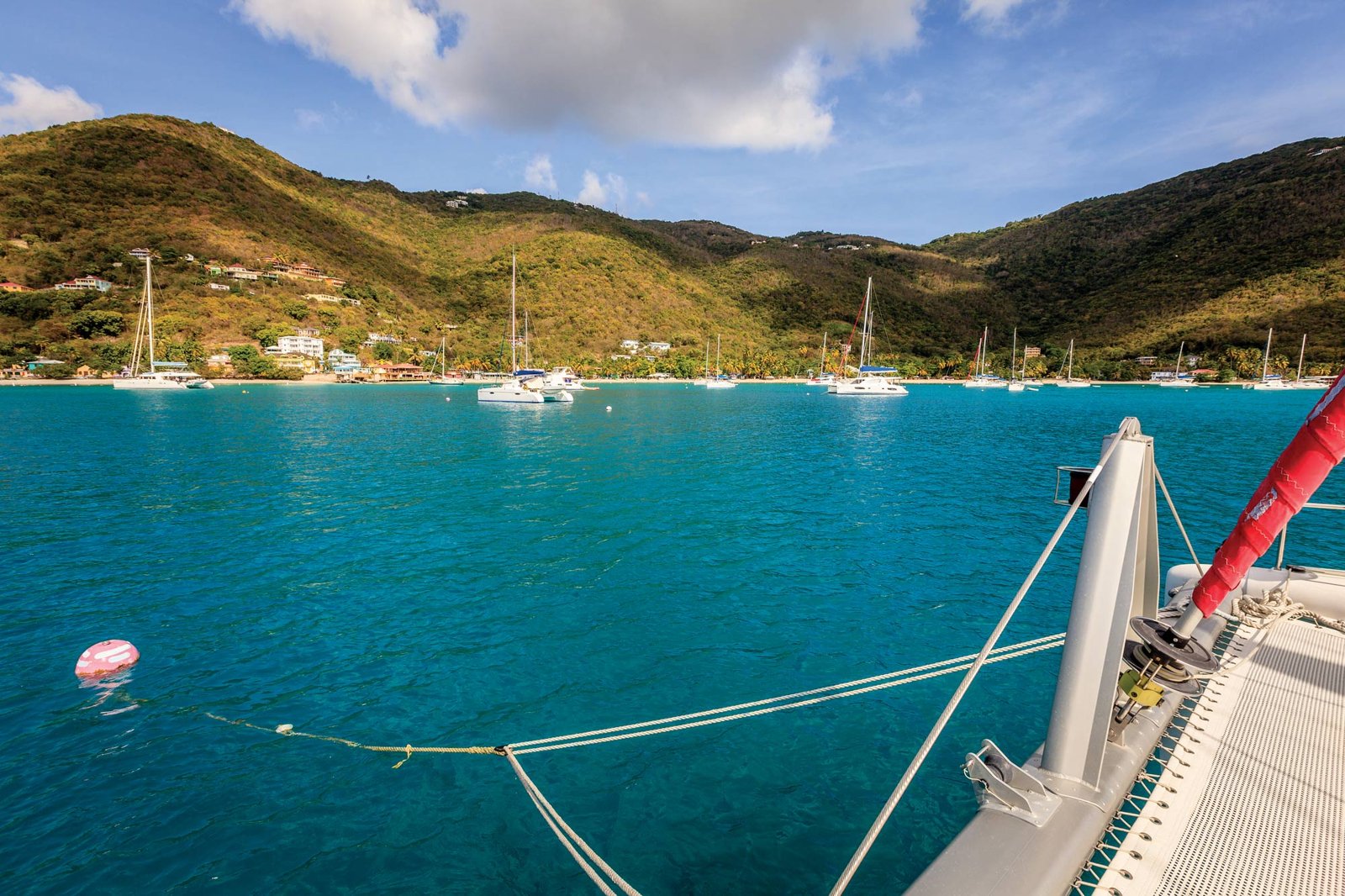
The mooring recovery technique is an essential competence for each sailor, which requires attention, practice and coordination between the crew. When the sailor at the tip of babord fixes the mooring line, he must communicate with the helmsman saying “Made!” to confirm the attack. The maneuver requires a proper judgement to keep the boat moving while reducing speed. In light wind conditions, it is advisable to start the turn towards the wind at about three or four lengths of boat from the boa. Practice with the crew is essential to improve the accuracy and safety of recovery. If you have trouble reaching the boa, you can turn around and try again. When the boat stops and stares, everyone will feel a feeling of satisfaction.
Preparation and coordination of the crew
Before starting the manoeuvre, it is important to evaluate the mooring area and the presence of currents. If there are currents, it is necessary to know their intensity and direction. Also, it is useful to check if there is a mooring lace or if you have to provide a line to attack the eye of the boa. Before starting, it is advisable to hold a brief meeting with the crew to assign specific tasks. All members must stay low to ensure a clear view to the helmsman. The goal is to direct towards the wind as it approaches the boa. A member of the crew can use arms signals to communicate any changes to the timoniere.
Before making the final turn, it is necessary to prepare the ropes to lower the sails. The sail must be folded or swirled if there is no furler. It is important to maintain control of the main rope to prevent it from moving unpredictablely when the boat turns towards the wind. Before the turn, make sure the main rope is free to go through the blocks. Under light wind conditions, the turn to the wind must take place at about three or four lengths of boat from the boa. It is important to remember that the faster you turn the boat, the faster you stop. The turn should cover about three lengths of distance. It is advisable to keep most of the crew away from the babord tip, since the forward weight reduces the speed of the boat.
Maneuver and safety during recovery
When the sailor at the tip of babord fixes the mooring line, he must communicate with the helmsman saying “Made!” to confirm the attack. A crew member must be ready with a hook to grab the pendant of the boa. The rope must be carried on the deck quickly, passed through a block and fixed to a carabiner. It is recommended to wear shoes during exercise and to use gloves, especially in conditions of dark or wet surfaces. On one occasion, a sailor grabbed a pendant with bare hands in dark conditions, but the gloves would make the experience more comfortable.
If you have trouble reaching the boa, you can turn around and try again. It is easy to judge how to reduce the virata for the second test. It is important to place the ropes on deck in an orderly manner, ready to be delivered to someone on the shore. It is useful to have the veil folded in blanket if there is no furler. It is advisable to approach the boa with only the main sail in tension. Practice with the crew is essential to improve the accuracy and safety of recovery. When the boat stops and stares, everyone will feel a feeling of satisfaction.
A sailor had the opportunity to perform a perfect recovery and received an invitation to dinner with the commander and the official leader. Mooring recovery technique requires concentration and attention, but with practice and coordination, it becomes a safe and satisfying maneuver. The maneuver requires attention and practice to be performed successfully. When the boat stops and stares, everyone will feel a feeling of satisfaction.