
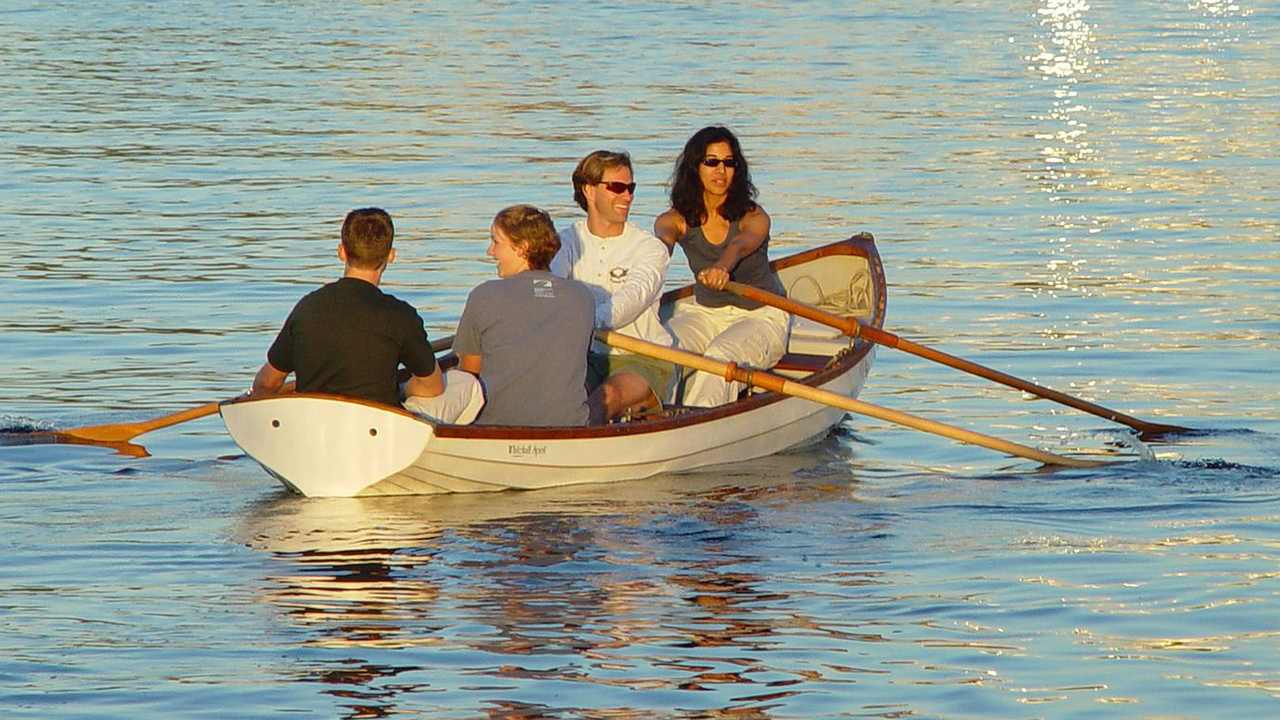
La Classic Whitehall Spirit 17 è una barca a remi di 5,2 metri costruita con scafo in vetroresina a corsi sovrapposti, finiture in teak e ferramenta in bronzo. La versione tradizionale usa panche fisse e offre tre posizioni di voga; la stessa piattaforma può ricevere equipaggiamenti per sedile scorrevole, vela o piccolo fuoribordo. Il peso dichiarato è 123 chilogrammi, la portata arriva a cinque persone e 375 chilogrammi. La varietà rende necessario configurarla prima di valutarla: una barca per uscite familiari non coincide con una macchina da allenamento o un tender. Questa guida separa dotazione standard, opzioni di fabbrica e controlli operativi, senza attribuire velocità o comportamento non misurati.
La configurazione tradizionale a sedile fisso
Il modello base impiega panche fisse e scalmi sul capodibanda. Il vogatore lavora con remi singoli, rivolto verso poppa, usando gambe e tronco in modo diverso rispetto allo sculling su carrello. Tre posizioni permettono di adattare la barca a una persona, a due vogatori o alla presenza di passeggeri. Prima dell’ordine si chiariscono numero di remi, lunghezza, materiale, scalmi e cime di sicurezza. La posizione corretta deve mantenere libertà di movimento e assetto, senza far interferire le impugnature con persone, bagagli o bordo.
Specifiche principali dichiarate
I dati dimensionali definiscono trasporto, portata e scelta degli accessori. Il peso del pagliolato è indicato separatamente e va aggiunto quando presente.
| Voce | Dato dichiarato | Verifica pratica |
|---|---|---|
| Lunghezza | 16’11”, 5,2 m | Spazio di rimessaggio e trasporto |
| Baglio | 52”, 132 cm | Carrello, posto e stabilità |
| Profondità | 18”, 46 cm | Bordo libero con carico |
| Pescaggio | 6”, 15 cm | Dato nominale da contestualizzare |
| Peso scafo | 272 lb, 123 kg | Esclude alcuni accessori |
| Pagliolato | 80 lb, 36 kg | Massa aggiuntiva dichiarata |
| Persone e portata | 1-5; 825 lb, 375 kg | Rispettare il limite complessivo |
| Fuoribordo opzionale | 2-8 hp, gambo lungo | Richiede piastra e specifica coerente |
Scafo in vetroresina con aspetto lapstrake
Il cantiere descrive lo scafo come laminato manualmente in vetroresina, con forme che riproducono i corsi sovrapposti delle imbarcazioni tradizionali. Le nervature longitudinali contribuiscono alla rigidità e all’identità estetica. In consegna si controllano uniformità del gelcoat, laminazione visibile nei gavoni, linea di chiglia e simmetria. Colpi, riparazioni o fori per accessori devono essere documentati. La vetroresina riduce alcune esigenze del legno massello, ma non è priva di manutenzione: abrasioni, infiltrazioni vicino alle viti e danni da carrello richiedono interventi tempestivi.

Teak e ferramenta in bronzo
Capodibanda, panche e dettagli in teak si uniscono a componenti in bronzo realizzati per il modello. La scelta dà continuità con le Whitehall storiche, ma introduce manutenzione e possibili differenze di finitura. Prima dell’ordine si definisce se il teak sarà lasciato naturale o trattato e quali prodotti siano ammessi. Viti e componenti devono essere isolati correttamente dai materiali circostanti. In ispezione si cercano giochi, fessure, annerimenti e acqua sotto le basi. Il bronzo sviluppa patina; pulizia aggressiva e lucidatura non devono rimuovere materiale o mascherare corrosione.
Tre posizioni di voga e bilanciamento
La barca dispone di tre stazioni per gli scalmi. Quando si voga da soli, la posizione scelta deve bilanciare peso del vogatore, bagagli e passeggeri. Con due vogatori servono ritmo comune e spazio sufficiente affinché i remi non interferiscano. La sequenza di verifiche registra altezza degli scalmi, distanza dalla panca, lunghezza dei remi e posizione dei piedi. Un assetto troppo appoppato o appruato aumenta resistenza e riduce controllo. Prima di allontanarsi si prova la configurazione vicino a riva, spostando i carichi finché bordo libero e manovrabilità risultano coerenti.

Portata di cinque persone: cosa significa davvero
Il limite dichiarato di cinque persone è accompagnato da una portata complessiva di 375 chilogrammi. È quest’ultimo valore a comprendere persone, attrezzature e bagagli. Cinque adulti possono superarlo; un equipaggio più leggero lascia margine per dotazioni. La disposizione conta quanto il totale: i pesi si distribuiscono lungo lo scafo e rimangono bassi. Nessuno siede sul capodibanda durante la navigazione. Giubbotti e attrezzatura di sicurezza si scelgono per ogni persona. Condizioni di vento e onda possono imporre un carico operativo più prudente del massimo.
Opzione slide seat singola o doppia
Il costruttore propone un’unità a sedile scorrevole singola o doppia, con outriggers in bronzo e due posizioni. Il carrello modifica tecnica, carichi e ingombro dei remi: non è un accessorio da aggiungere senza prova. Si verificano rotaie, fermi, sedile, pedaliere e possibilità di smontaggio. Per due vogatori la sincronizzazione è essenziale e l’area libera deve impedire urti. La configurazione va associata a remi corretti e a un metodo di stivaggio. Dopo l’uso in acqua salata, carrello e componenti richiedono risciacquo e controllo.
Versioni a vela e combinazioni
La piattaforma Spirit 17 è disponibile anche con armo velico e in configurazioni che combinano voga, sculling e vela. La versione a vela utilizza un armo a tarchia descritto dal costruttore come semplice da gestire, con deriva basculante e timone sollevabile. Questi componenti non appartengono automaticamente alla barca tradizionale qui analizzata. Se scelti, devono comparire nella specifica con albero, vela, deriva, timone, attacchi e pesi. La trasformazione cambia stabilità, addestramento e inventario di sicurezza; va provata nelle condizioni previste.

Fuoribordo opzionale da 2 a 8 hp
Il cantiere indica compatibilità con fuoribordo a gambo lungo fra 2 e 8 hp attraverso una piastra di poppa opzionale. Potenza, peso e alimentazione devono essere scelti insieme. Un motore pesante sposta l’assetto a poppa e sottrae portata utile; serbatoio, cavo e attrezzature devono essere fissati. Si verifica altezza della piastra, immersione, rotazione, arresto e possibilità di sollevare il motore senza interferenze. La potenza massima non è un invito a cercare velocità: il controllo e i limiti dello scafo restano prioritari.
Pagliolato standard, teak e piano galleggiante
La configurazione può includere pagliolato, variante in teak o piano completamente galleggiante per uso tender. Il dato di 36 chilogrammi attribuito al pagliolato mostra che la scelta incide sul peso totale. Ogni pannello deve essere fissato e removibile per pulizia e ispezione. Il piano galleggiante va compreso nella documentazione di portata e drenaggio, non dedotto dal nome commerciale. Si controllano ristagni, ventilazione e accesso alla sentina. La superficie deve offrire presa quando è bagnata e non creare spigoli nei movimenti.

Carrello di alaggio e punti di appoggio
Con 5,2 metri e almeno 123 chilogrammi di scafo, la movimentazione richiede un carrello dimensionato. Rulli o selle devono sostenere aree robuste senza concentrare il carico sui corsi decorativi. Prua e poppa vanno bloccate con cinghie che non danneggiano teak o gelcoat. Ruote, cuscinetti e verricello si controllano prima di ogni varo. La pendenza dello scivolo, il vento e l’assenza di freni possono rendere difficile la manovra. Il peso reale comprende pagliolato, remi e accessori, quindi va calcolato sulla configurazione completa.
Rimessaggio, copertura e ventilazione
La barca può restare su carrello, a terra o all’ormeggio, ma ogni soluzione richiede supporti e copertura coerenti. Una copertura impermeabile senza ventilazione può trattenere condensa; una troppo lasca accumula acqua. Il teak non deve restare a contatto con umidità stagnante. Tappi e drenaggi si gestiscono secondo posizione e meteo. Remi, carrello e parti in bronzo vengono rimossi o assicurati. Durante il rimessaggio si alleggeriscono i punti di appoggio e si ispeziona la chiglia. L’accesso deve consentire controlli periodici, non sigillare la barca per mesi.

Dotazioni di sicurezza per una barca aperta
La configurazione aperta espone equipaggio e attrezzatura. Giubbotti indossati, mezzo di comunicazione protetto, cima, sassola o pompa e dispositivo sonoro formano una base da adattare a regole e area. I remi possono essere assicurati senza ostacolare la voga; uno strumento alternativo di propulsione va valutato. Telefono e chiavi restano in contenitori impermeabili. Si pianificano rientro e approdi prima di partire. Una barca tradizionale può affrontare acque diverse, ma la decisione dipende da equipaggio, temperatura, vento, corrente e traffico.
sequenza di verifiche prima dell’ordine
La scheda deve indicare colore, finitura del teak, pagliolato, numero di postazioni, remi, scalmi e accessori. Si decide se servono slide seat, armo velico, piastra motore, protezione della chiglia o piano galleggiante. Per ogni opzione si annotano peso, compatibilità e metodo di stivaggio. Trasporto, consegna e accesso allo scivolo vanno risolti prima dell’acquisto. Le fotografie commerciali possono mostrare allestimenti diversi; prevale la lista firmata. Manuali, portata e identificazione dello scafo devono accompagnare la barca.

controlli di consegna e prova in acqua
In consegna si pesa o almeno si inventaria la configurazione, si controllano finiture, serraggi e dotazioni, quindi si prova in acqua calma. Il vogatore verifica posizione, escursione dei remi, simmetria e risposta in arresto. Si imbarcano passeggeri progressivamente, osservando assetto e bordo libero. Eventuali carrelli scorrevoli devono muoversi senza impuntamenti. Se presente il motore, si provano avviamento, arresto e governo a bassa velocità. Al rientro si cercano infiltrazioni, allentamenti e segni di contatto del carrello. Ogni difetto entra nel verbale.
Manutenzione dopo ogni uscita
Acqua dolce, sabbia e sale vengono rimossi da scafo, bronzo, remi e componenti scorrevoli. La barca si asciuga ventilata; non si copre ancora bagnata. Si controllano scalmi, cime, panche e scarichi. Periodicamente si ispezionano gelcoat, chiglia, teak e fissaggi, intervenendo prima che una piccola abrasione raggiunga il laminato. I prodotti per il legno devono essere compatibili con la finitura scelta. Carrello e ruote richiedono un programma separato. Una registrazione semplice delle anomalie evita che piccoli giochi diventino guasti durante l’uscita successiva.

Valutazione della configurazione
La Classic Whitehall Spirit 17 combina linee tradizionali, vetroresina, teak e bronzo in una piattaforma che può restare una pura barca a remi o ricevere sistemi più complessi. Il suo valore non sta nell’accumulare ogni opzione, ma nel scegliere quelle coerenti con uso, equipaggio e trasporto. Per voga tranquilla bastano postazioni fisse ben regolate; per allenamento serve una configurazione slide seat completa; vela e motore richiedono procedure proprie. Specifica chiara, distribuzione dei pesi e manutenzione accurata determinano la qualità dell’esperienza più di qualunque promessa generica.